São Tomé and Príncipe#
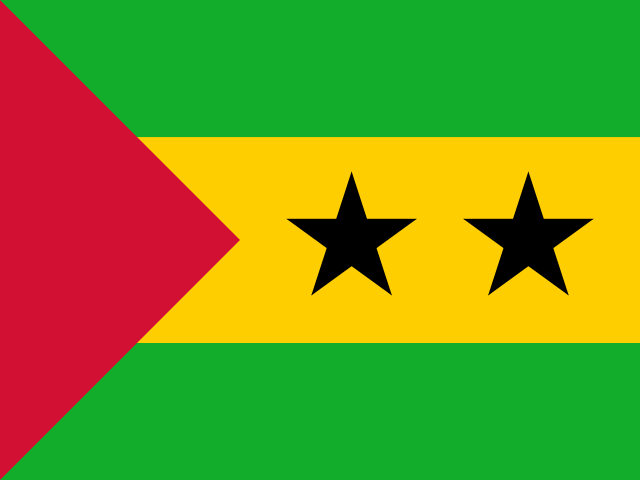
Portugal discovered and colonized the uninhabited Sao Tome and Principe islands in the late 15th century, setting up a sugar-based economy that gave way to coffee and cocoa in the 19th century – all grown with African slave labor, a form of which lingered into the 20th century.
Government type: semi-presidential republic. Chief of state: President Carlos Manuel VILA NOVA (since 2 October 2021).
Facts#
Capital |
Sao Tome |
Region |
Central Africa, islands in the Gulf of Guinea, just north of the Equator, west of Gabon |
Area |
total : 964 sq km; land: 964 sq km; water: 0 sq km |
Population |
223,561 (2024 est.) |
Languages |
Portuguese 98.4% (official), Forro 36.2%, Cabo Verdian 8.5%, French 6.8%, Angolar 6.6%, English 4.9%, Lunguie 1%, other (including sign language) 2.4%; other Portuguese-based Creoles are also spoken (2012 est.) |
Currency |
dobras (STD) |
Time zone |
to be filled |
ccTLD |
.st |
Refugees#
Camps hosting refugees, asylum-seekers, and internally displaced persons (IDPs) inside the country. Operators use this to track population movement, NGO and UN footprint, humanitarian access corridors, and the political pressure conflict generates on the host. Cross-reference UNHCR Operational Data Portal, IOM DTM, and ReliefWeb before relying on the entry.
Camp |
Population |
Origin |
Location |
Notes |
|---|---|---|---|---|
to be filled |
to be filled |
to be filled |
to be filled |
to be filled |